 RATPOOL
Play-to-Earn Paid People for Showing Up. The Next Wave Pays Them for Getting Good.
Play-to-earn paid players for their time, in a token that collapsed. Skill-to-earn pays the best players from stakes already in the pot. What that changes for the people playing.
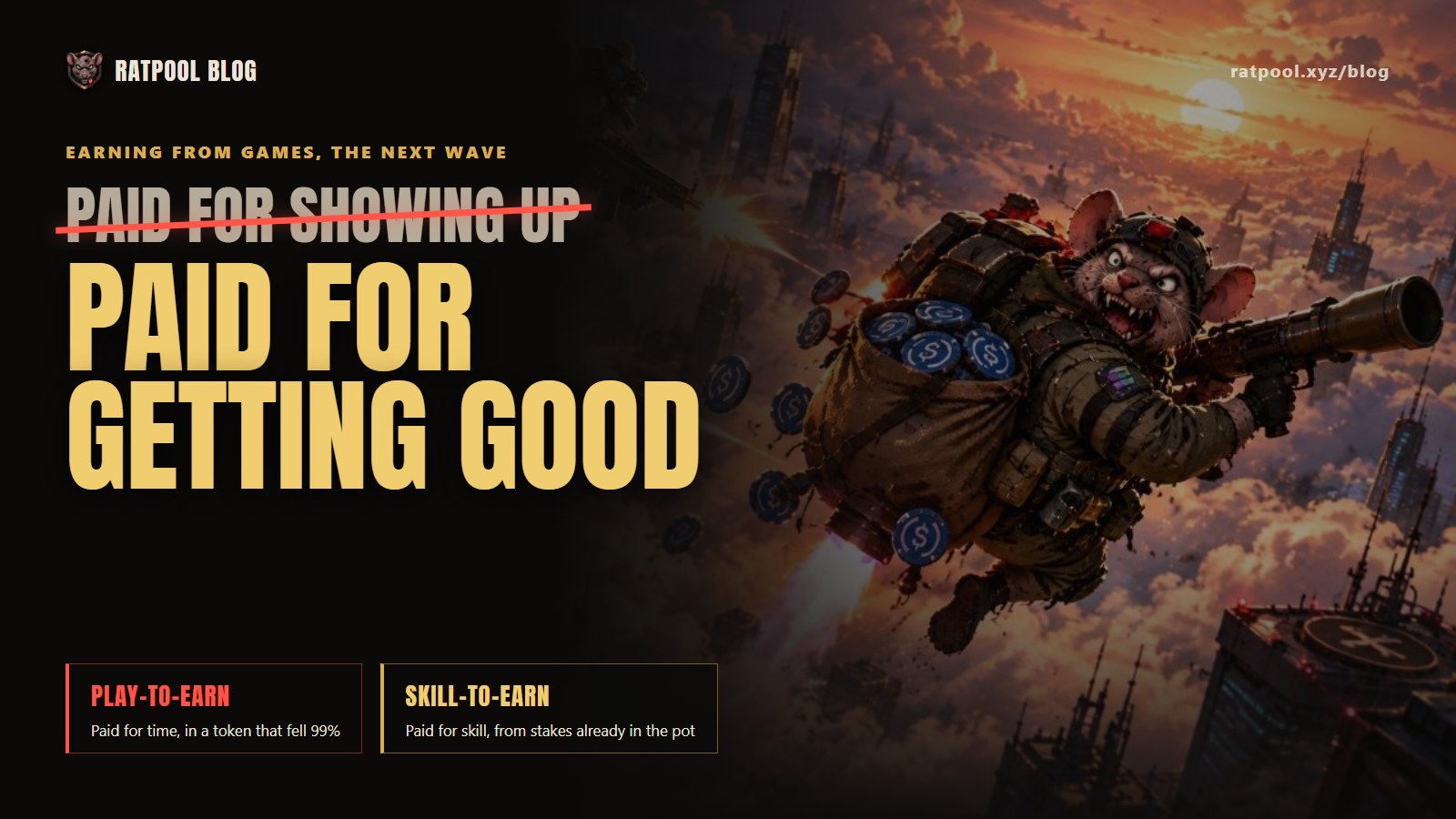
Back in 2021, play-to-earn games like Axie Infinity got a lot of people earning from their phones. The part most people didn't look at was where that money was coming from, which was mostly new players buying their way into the game. So when new players stopped coming, the earnings dried up with them.
That's the short version of what happened, and here's the takeaway I keep coming back to: play-to-earn paid people for showing up, and the model replacing it, skill-to-earn, pays people for getting good. Those two things sound close, but they lead to very different results for the people playing.
To see why, it helps to look at what play-to-earn actually felt like for the people inside it, because for a lot of them it looked a lot like a job.
In the Philippines, where an estimated 40% of Axie's players were based, according to Cointelegraph, many people couldn't afford the NFT creatures needed to play. So a "scholarship" system grew around the game. Owners lent their Axies to players, the players put in the hours, and the earnings were split. Thomson Reuters Foundation's Context reported that one manager with about 200 scholars took 60% of what they earned, and his scholars averaged around 450 pesos a day, just under the 470-peso minimum wage outside Manila.
A scholar's day in the Philippines
So the people doing the playing often didn't own the tools, didn't control the pay rate and were earning close to the minimum wage at the best of times. And because they were paid in a token, their pay could change overnight for reasons that had nothing to do with how well they played.
That's exactly what happened. The token Axie players earned, SLP, fell 99% from its February 2022 peak, according to the same Context report. Daily active users dropped from about 2.5 million in November 2021 to about 1.2 million by April 2022, per The Block. STEPN, the move-to-earn app, went through the same thing even faster, with its GST token losing about 98% of its value in roughly two months, as CryptoSlate reported.
The scholars who stuck around didn't suddenly get worse at the game. Their skill stayed the same, but their pay collapsed anyway. That tells you the pay was never really connected to their skill in the first place. It was connected to whether new players were still joining.
What changed, and what didn't
The scholars' skill
The same players, in the same game, playing as well as before.
Unchanged
Their pay
SLP, the token they were paid in, from its February 2022 peak.
−99%
I think this is the part of the story that gets lost when people dismiss "earning from games" as a bad idea. The idea itself isn't bad. People already earn from games all over the world. Esports players earn prize money, chess players win tournaments, and in a lot of communities, including here in Nigeria, people have played games for small stakes among themselves for as long as anyone can remember. What all of those have in common is that the money goes to whoever performs best.
Play-to-earn didn't work like that. It paid everyone a little for their time, using money that depended on growth, and called it a game economy. When the growth stopped, everyone's pay fell together, the skilled and the unskilled alike.
Skill-to-earn turns that around. Players who want to compete for money put up an entry stake, all the stakes go into one prize pool, and the best performers in that match take it under fixed rules, with a platform fee taken out. Nothing is minted, so there's no token waiting on future buyers. The money exists before the match starts, and the only thing that decides who gets it is how well you play.
That changes a few important things for the people playing:
- Your earnings depend on your performance, and the game's growth rate doesn't decide them.
- Joining late doesn't put you at a disadvantage, because each match starts from zero.
- You don't need an owner or a manager, because you aren't renting someone else's asset to play.
- A payout doesn't lose value the next day, because it's paid in money that already exists and not in a reward token.
One project building on this model is RatPool (@Ratpoolxyz), a real-time multiplayer 2D arena shooter on Solana. Players score from kills and from holding a moving zone, and in staked pools the top three by score split 90% of the pool at 50%, 30% and 20%, with the platform keeping 10%, according to the RatPool whitepaper. There's no token, and players sign in with Google without needing a seed phrase or paying network fees. Stakes sit in an on-chain escrow that pays the winners automatically and refunds everyone in full if a match isn't settled within 30 minutes.
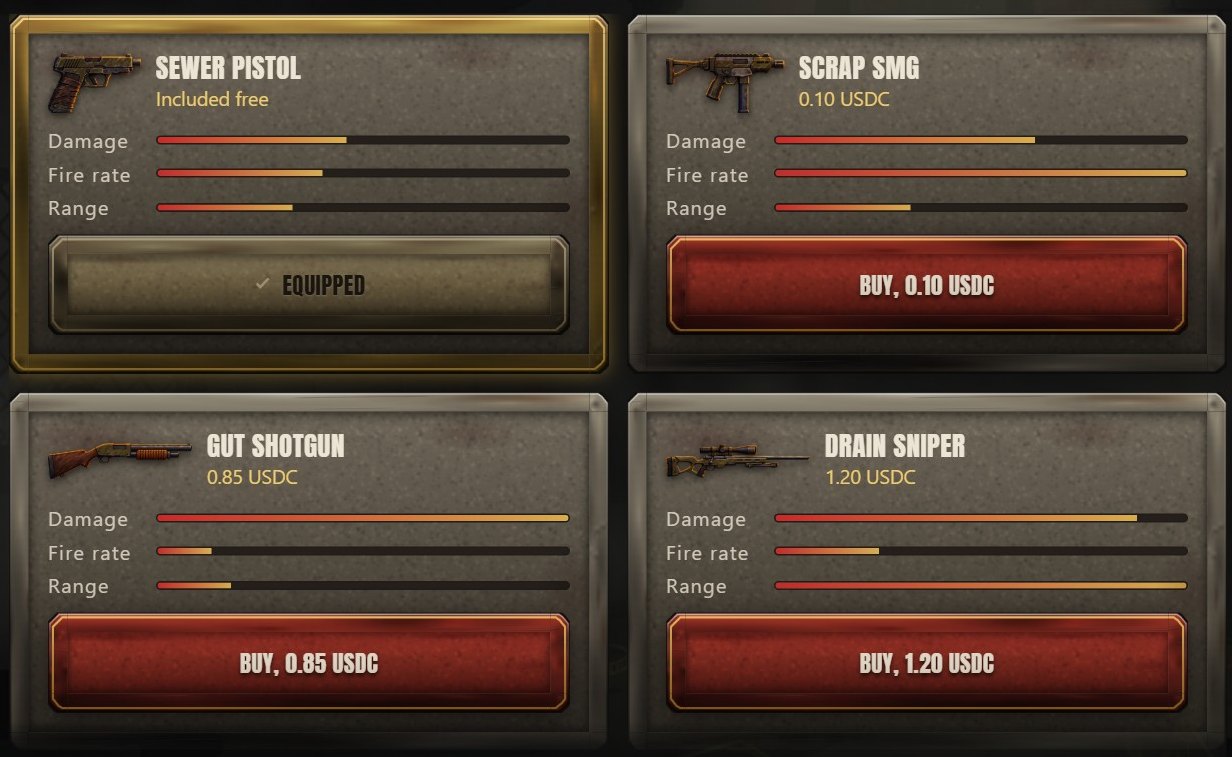
What stands out to me about RatPool's design is how directly it answers the scholarship problem. In Axie, you needed to own NFTs before you could earn, which is why so many players ended up renting from managers. In RatPool, the site says the pistol is free forever, Free Play against bots is always open with no stake, and the store can't sell health, armour or a bigger share of the pool. A player with nothing to spend and a player with a lot to spend face exactly the same payout rules. The only edge you can build is skill, and you can build it for free.
It's still early. RatPool is currently live on Solana devnet with test USDC, which has no cash value, and mainnet comes after an independent audit of its escrow and payments system. Pool entry prices on devnet are test settings and could change. The legal side of staking on skill-based games also varies by country, and the whitepaper is clear that access to paid pools depends on where you live.
I also want to be honest about the trade-off, because it matters more than any feature. Skill-to-earn isn't a job, and it shouldn't be sold as one. In a full room of 40 players, three get paid and 37 don't. With a 10% platform fee, an average player loses a little over time, and only players who are genuinely better than the room come out ahead. That's harder to hear than "everyone earns," but it's true, and the people who got hurt most by play-to-earn were the ones who were never told the truth about where their pay came from.
A full room of 40: who gets paid
- Paid: 1st, 2nd and 3rd
- 37 lose their stake for that match
So here's where I land. Gaming will never be a reliable income for most people, and any model that promises that is setting them up for disappointment. What gaming can be is a skill that pays the people who get really good at it, the same way chess, football or any competitive pursuit pays its best. Play-to-earn treated players like workers and then paid them in a currency that disappeared. Skill-to-earn treats them like competitors and pays them in money that was already on the table.
My prediction is that over the next few years, the crypto games that last will be the ones where you can explain the payout in one sentence: the best players win the stakes, minus a fixed fee. The ones still paying minted tokens for time spent will keep repeating 2022.
I'd like to hear from people who were close to the play-to-earn wave, whether you played, managed scholars or just watched it happen. Do you think paying players for skill is a fairer model than paying them for time, or does it just shift the risk onto a different group of people?